Ideal Way to Design in Figma With Auto Layout for Pixel Perfect Conversion
Learn the ideal way to structure your Figma layout with Auto Layout for a pixel-perfect UiChemy conversion.
UiChemy eliminates the hassle of manually recreating your Figma design in WordPress. By directly exporting your Figma layout into an Elementor or Gutenberg template, you save valuable time and effort, letting you focus on fine-tuning the visual details and enhancing the user experience.
However, you have to follow certain design guidelines while designing your layout in Figma for a pixel-perfect conversion with UiChemy, one of them is using Auto Layout.
What is Auto Layout in Figma?
Imagine you're drawing a picture, and you want to make sure it looks good no matter how big or small the frame is. That's what Auto Layout in Figma does for designers: it helps them create designs that automatically adjust and look great on different screen sizes.
Auto Layout is like a magic tool that helps designers arrange elements in their designs so they can resize and rearrange without the designer having to do it manually, like having objects that know how to behave and move around on their own.
Best Way to Use Auto Layout in Figma for UiChemy
While designing a layout in Figma, keep all the elements inside a main Frame (the top-level frame).
Then add frames to create sections inside the main frame, following the fundamental web layout structure where sections are placed vertically one after another inside the main container. You can add elements inside the sections only.
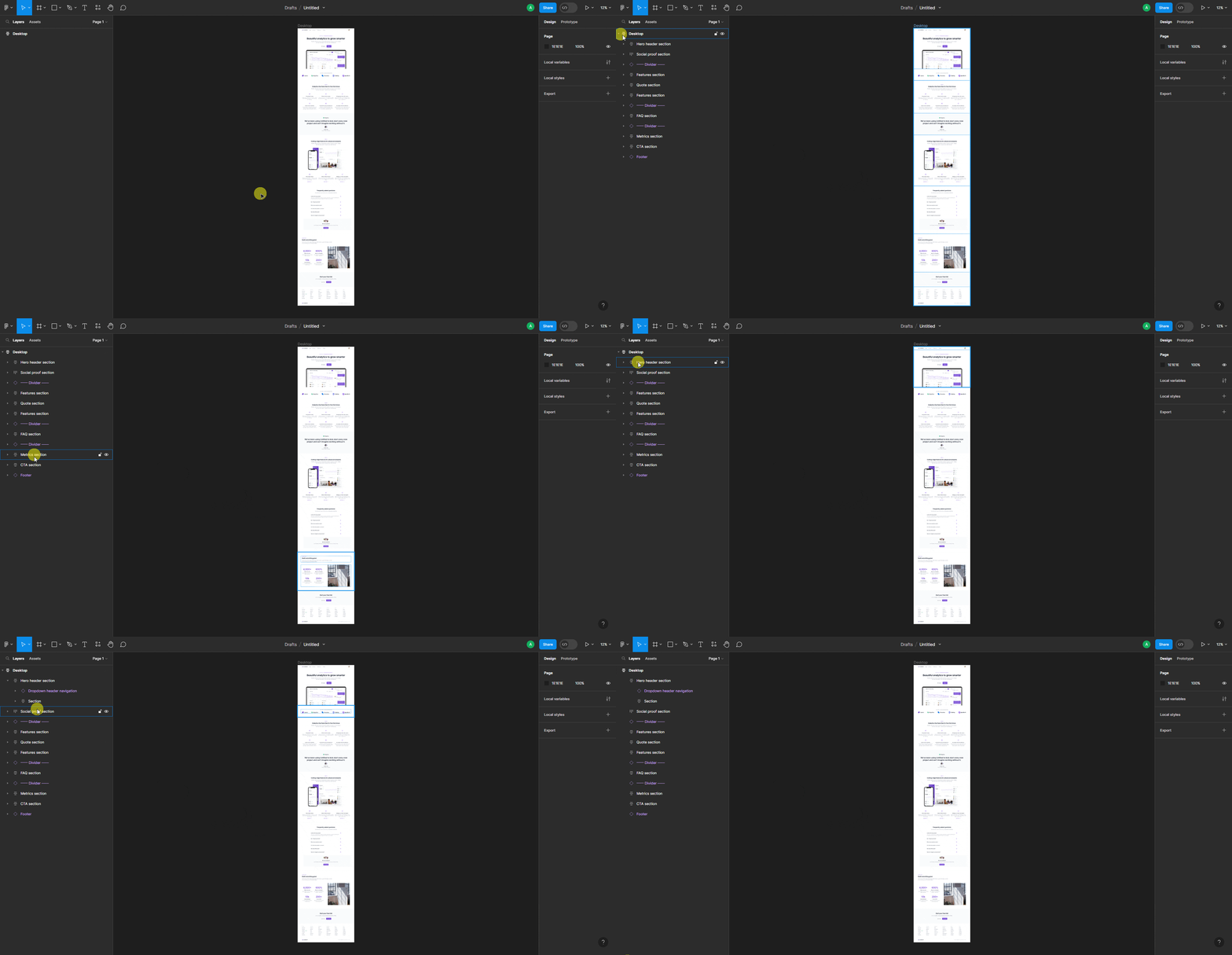
Don't add any elements directly outside the container, as those will be ignored while exporting the layout.
For the top-level frame:
- Enable Auto Layout
- Set layout to Vertical layout and alignment to Align top center
- Set Horizontal padding, Vertical padding, and Vertical gap between items to 0, so there are no unnecessary spaces
- Set a fixed width for the top-level frame (your preferred value). For height, use Hug contents or Fixed height, whichever you're comfortable with
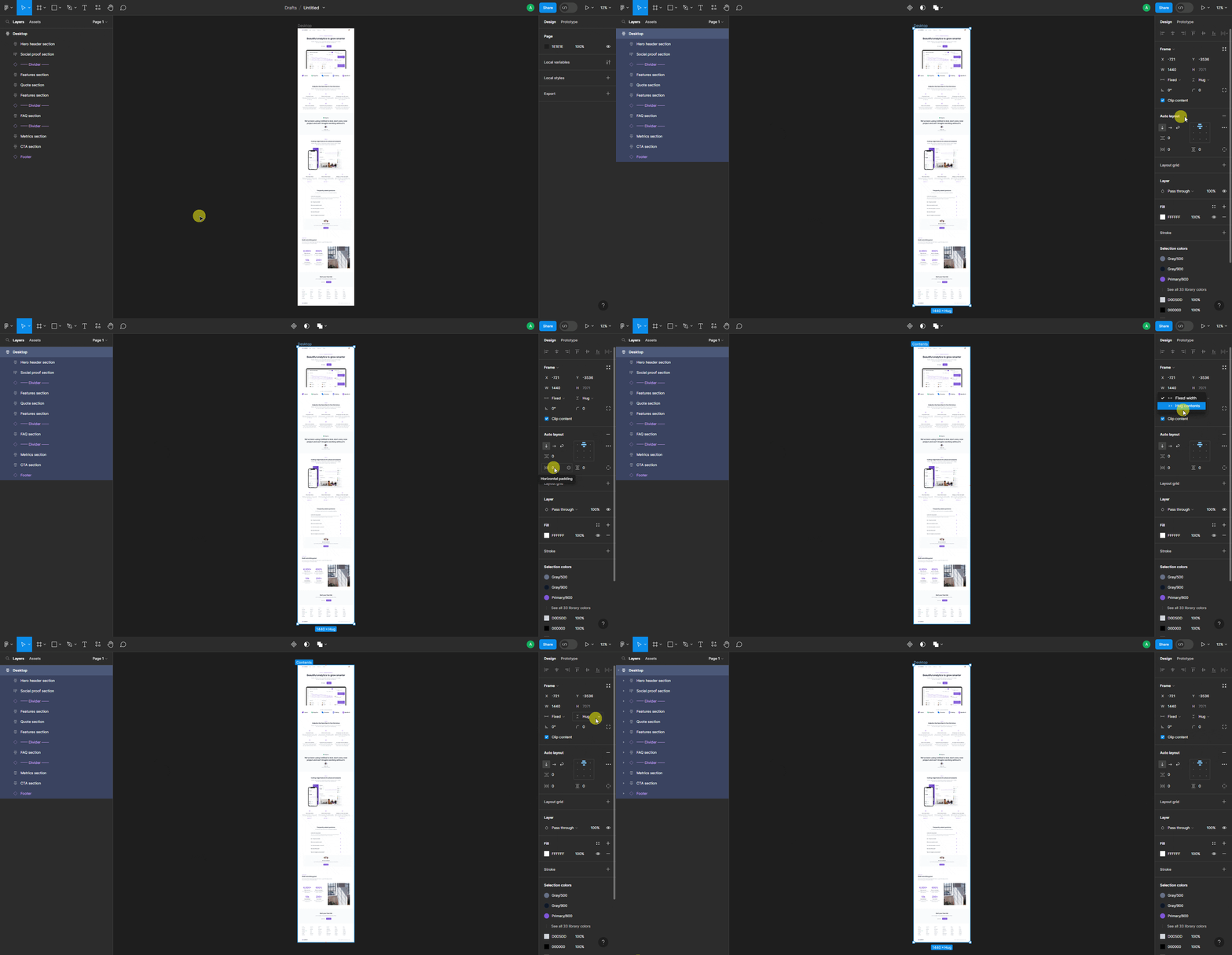
You can also use a Page template in UiChemy to create the top-level frame quickly, with all the recommended settings already applied.
For the sections inside the top-level frame, enable Auto Layout for a better responsive layout, then set the layout and alignment according to your needs.
You can use absolute positioning as well, but it can cause issues with the responsive layout. We recommend setting width to Fill container for a better responsive result (though Fixed width is also supported). For height, Hug contents keeps the design flexible.
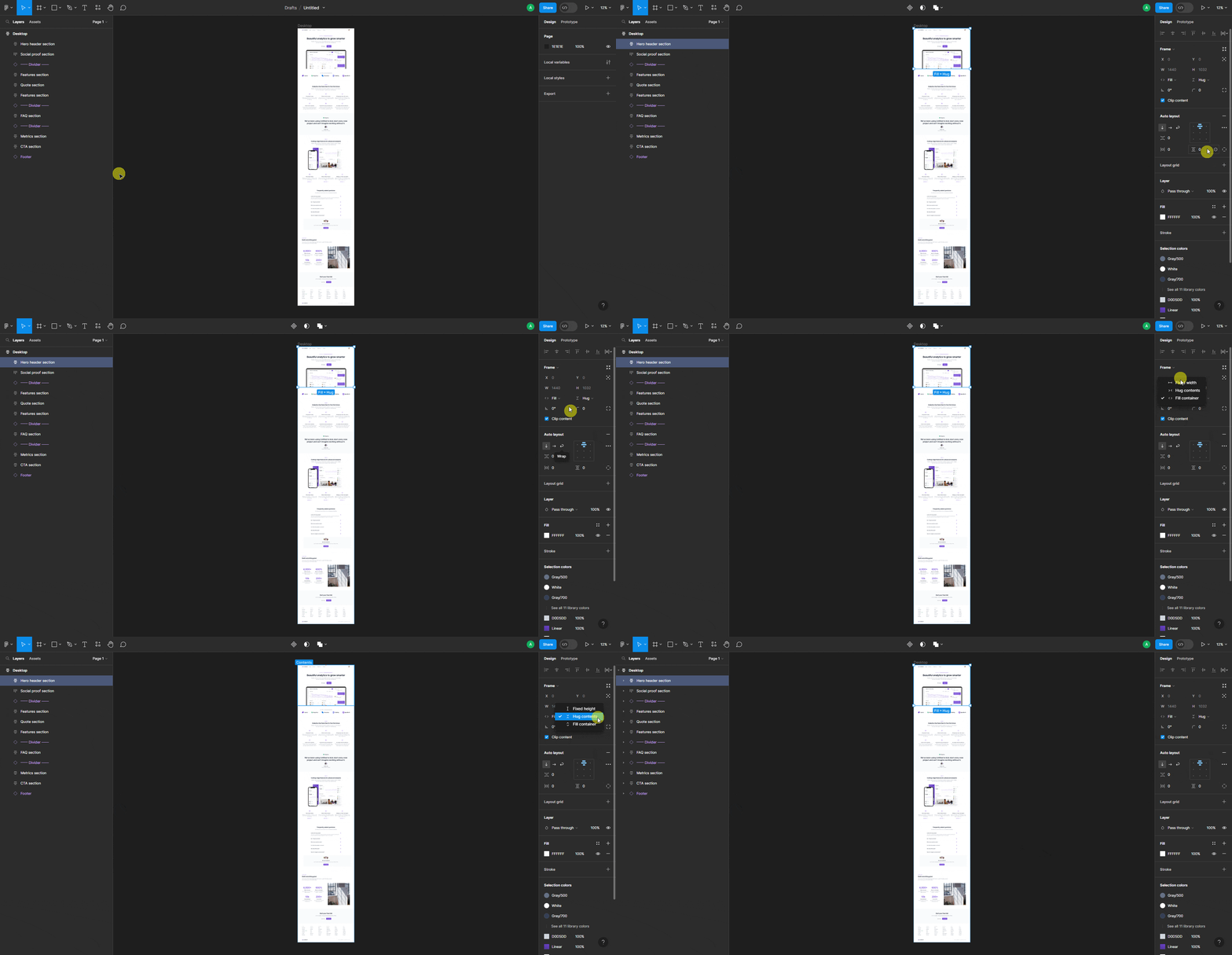
Follow the same structure for all sections inside the top-level frame.
Enabling Auto Layout gives you the advantage of the CSS Flexbox property on the page and for sections in the exported template. While creating the layout in Figma, try to use fewer nested frames/containers for a better editing experience in Elementor.
You can use components and instances for creating sections and elements in your Figma layout.
Frequently Asked Questions
What are common mistakes when using Auto Layout in Figma?
One common mistake is adding elements directly outside the main container, which will be ignored during export. All elements should be placed inside a top-level frame to maintain layout integrity when exporting.
How do I ensure my Figma design is responsive when using UiChemy?
Enable Auto Layout for your top-level frame, set it to a vertical layout with zero padding and gaps, and use Fill container for width and Hug contents for height. This leverages CSS Flexbox properties in the exported template so your design adapts well across devices.
Does UiChemy support exporting designs from other tools besides Figma?
No, UiChemy exclusively converts designs from Figma.
What is the best way to set up my top-level frame in Figma for UiChemy?
Enable Auto Layout, choose a vertical layout, and align items to the top center. Set horizontal and vertical padding to zero to avoid unnecessary spacing.
What happens if I use absolute positioning in my Figma layout?
It can cause issues with responsive layouts when exporting. Use relative positioning, like Fill container, so elements adjust properly across different screen sizes.